Experimental Crisis In Class
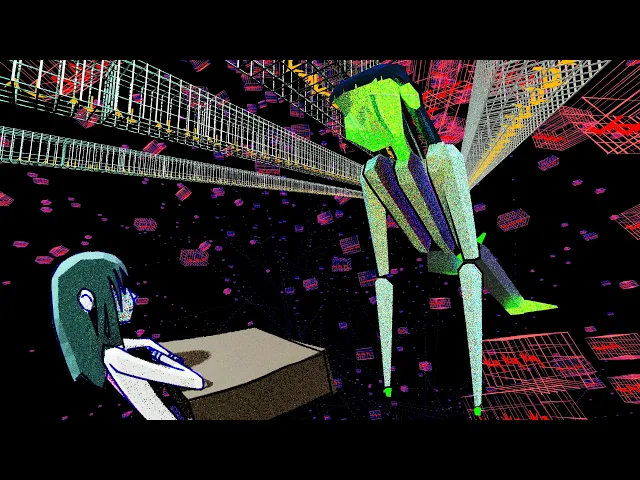
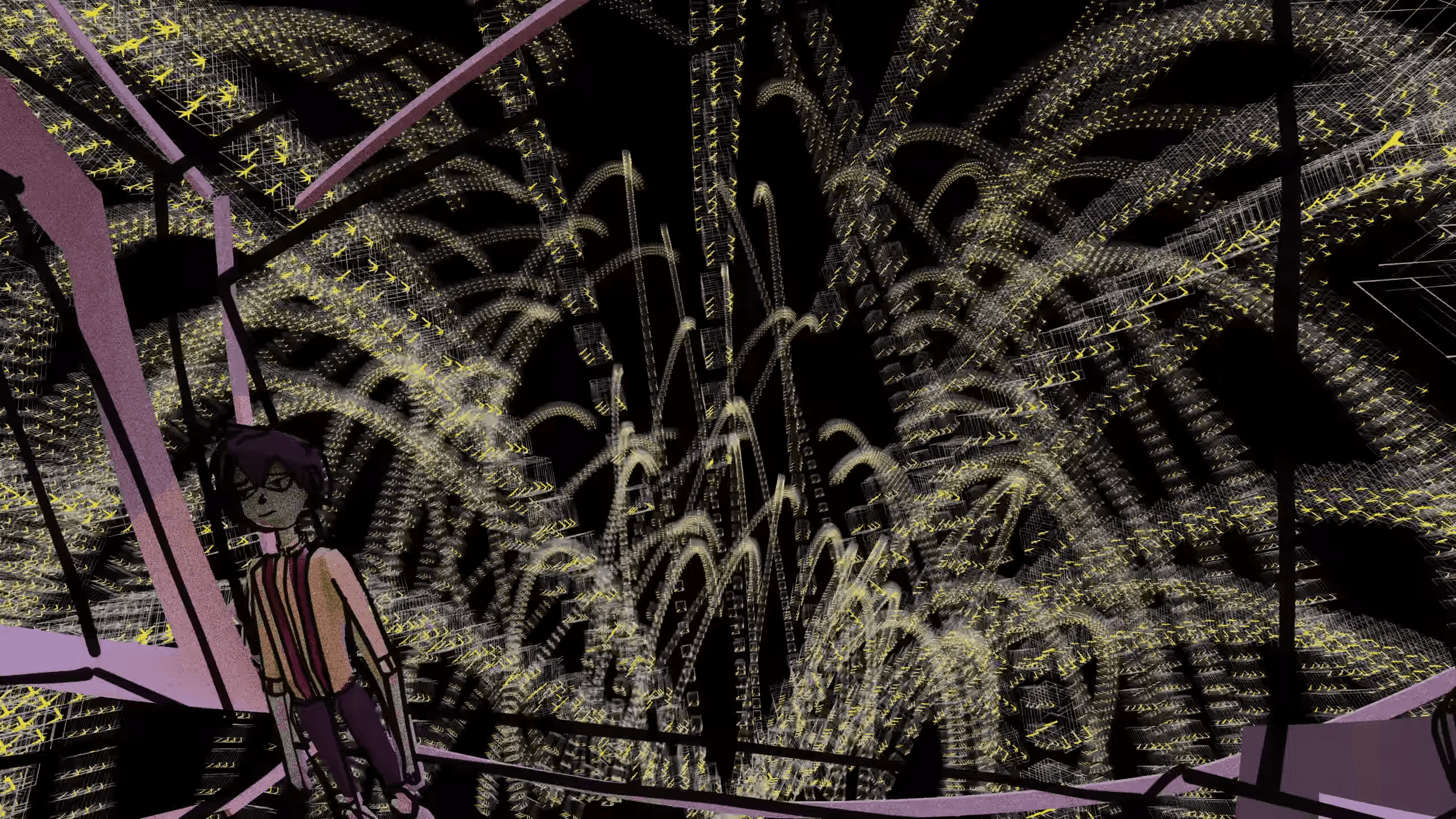
These descriptors are used to introduce WhatsItLike’s 2025 YouTube video Existential Crisis In Class, an incredibly inspired and emotional experimental art piece presented as a surreal in-class lecture. The presenter in the class, who I believe is voiced by the creator, gives an expansive, contemplative presentation ultimately about the suffering of caged chickens in the farming industry and the feeling of universal empathy for all living beings. The entire video captures the essence of its incredibly abstract, existential, and emotional subjects through a dreamlike atmosphere and variety of different artforms, from traditional animation to 3D animation to live action footage. This video, its message, and how it was able to convey everything created such a unique and impactful experience, one that I will truly never forget.
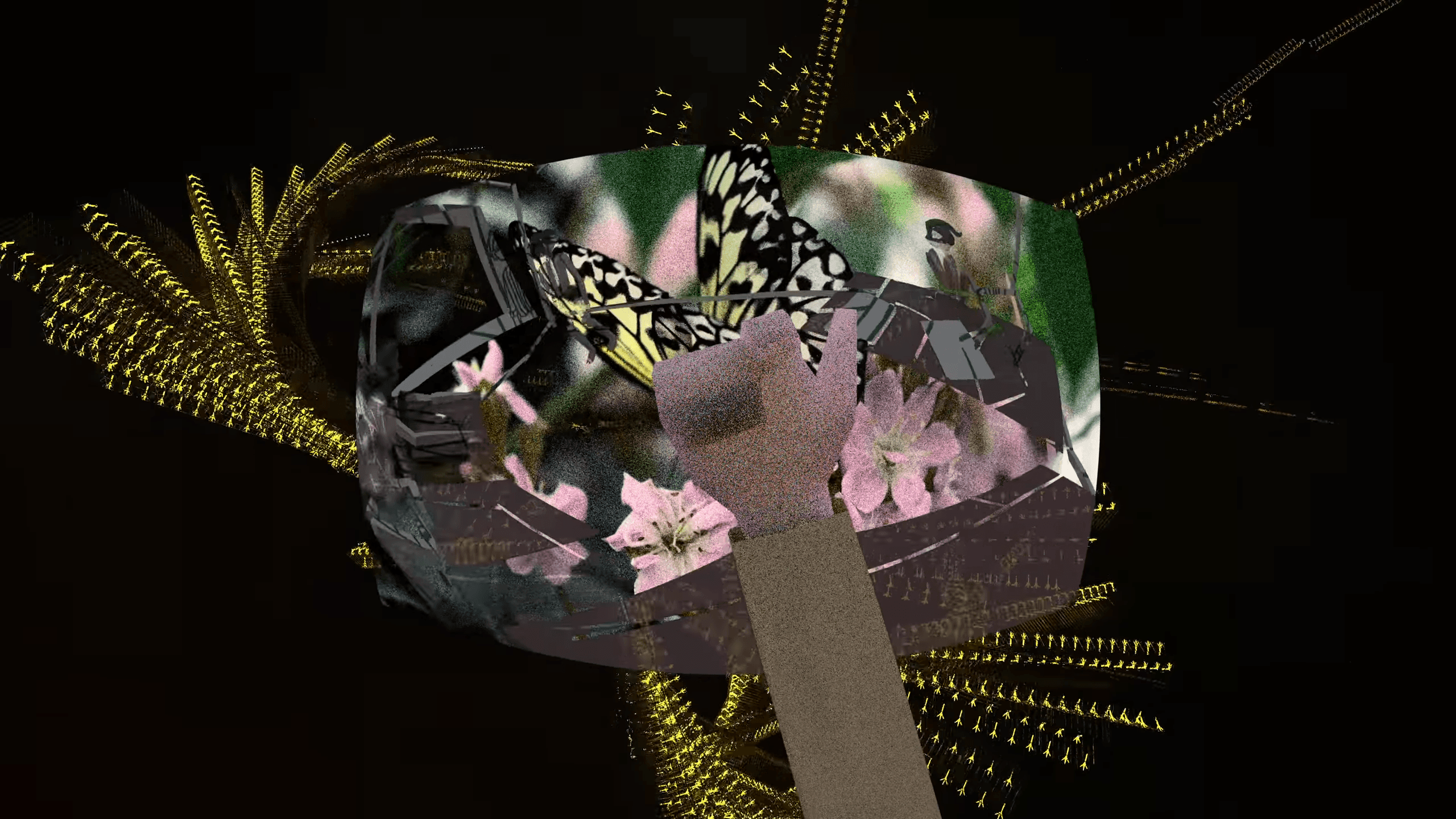
This video explores an expanse of different mediums, all supporting its existential presentation and message. Courtesy of WhatsItLike.
Like many of the best experimental works of art, Existential Crisis in Class stands apart by how its choice of mediums and techniques work together to support its overall message. The abstract, surreal, and vast way everything in this video is presented seems like the best way to properly communicate how large and conceptual the subject matter is. The video does not shy away from hard-to-understand or hard-to-express emotions, from seeing the suffering of other living things to not knowing if it’s possible to change those things. But through the surreal, expressive nature of its visuals, the video is able to capture the emotional essence of these feelings, even if they would be hard to literally express through words.
It’s also remarkable how this work is able to somehow express the incredible scale of the existential topics discussed. Throughout the lecture, the presenter begins with smaller ideas of ant colonies and how humans have grown dependent on their phones. But progressively, it grows into larger, more complex ideas that are truly difficult for one human to comprehend. When speaking about the total amount of suffering caged chickens have experienced, the presenter asks, “What would the volume of the human skull need to be for someone to feel a proportional amount of existential terror?” I found this question to be one of the most interesting parts of the video, how it contemplates if even its own subject matter can truly be communicated and understood. But I think WhatsItLike truly understands the difficulty of expressing these massive ideas, and takes this challenge on by creating a video that feels appropriately huge and complex. With the ever expanding 3D visuals of chicken-cage cyborgs, uncanny blending of mediums, and expansive atmosphere throughout it all, the video creates a space for previously intangible ideas and issues to be explained and understood emotionally to the viewer.
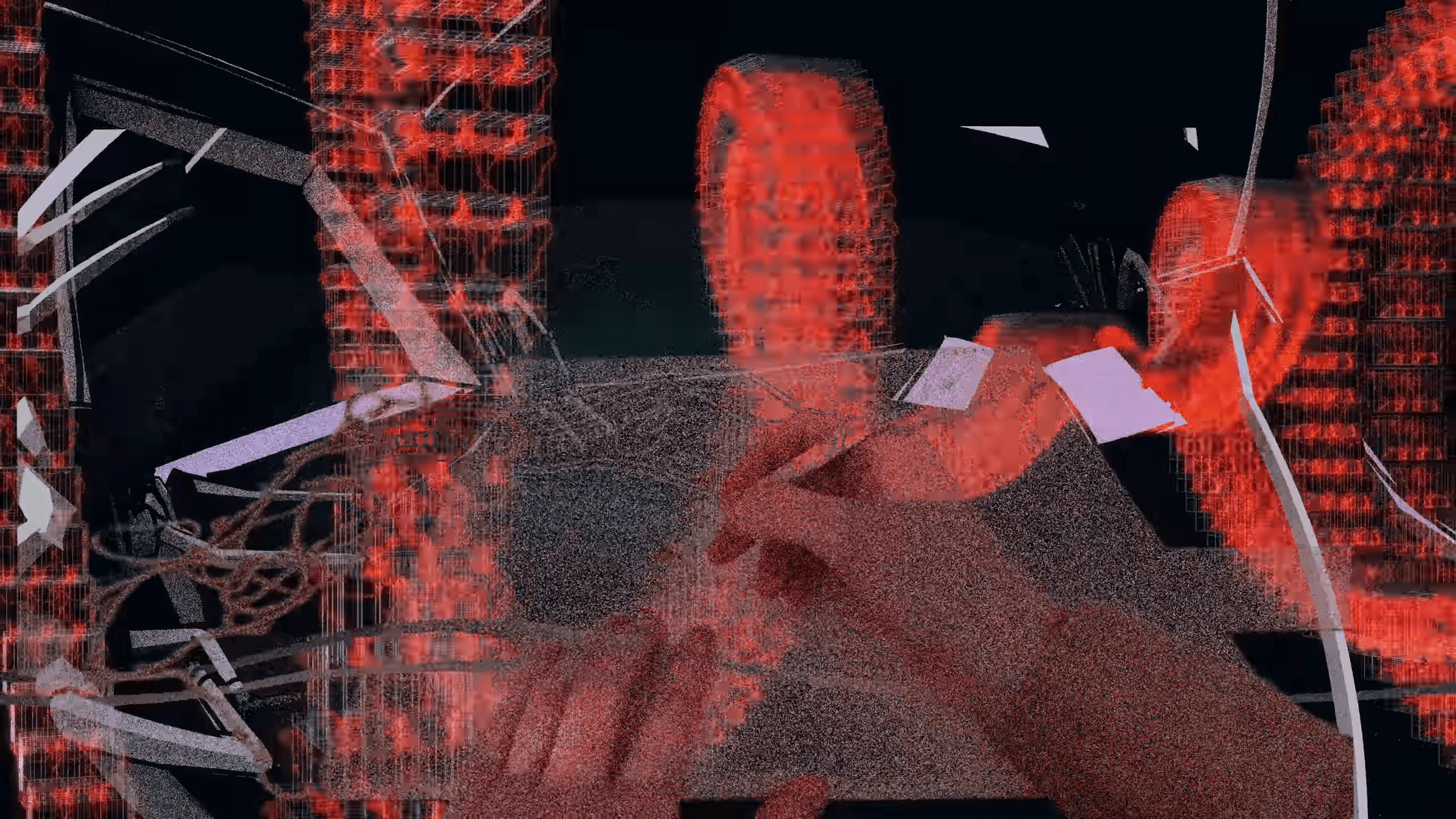
The video goes back and forth between the surreal presentation and the protagonist's perspective sitting in class. Courtesy of WhatsItLike.
This is also where the protagonist’s role in the video comes in. Roughly everything in the video is being seen through this protagonist’s point of view, albeit with some abstracted and surreal imagery. By doing this, the video showcases another character attempting to learn and understand all of these ideas alongside the viewer. And when the narrator asks questions and witnesses surreal imagery, it shows that understanding everything presented feels as complicated for them as it is for the viewer. In addition to being a companion to the viewer in navigating the video’s abstract world, it is the narrator’s sense of empathy that’s truly a driving force for this piece. He feels the suffering for all living things and can’t stand it, reacting vividly whenever there is mention of an organism in pain. His empathy even extends to his perspective, putting himself in the position of these animals and feeling their very same suffering. This ultimately leads him to wanting to separate his own consciousness from the “mesh of life,” creating more introspective questions for the viewer on how they themselves will react to this information. Will they have empathy like the protagonist, even if it is difficult with the amount of suffering surrounding us? Or will they separate themselves from the suffering, easing their own pain but doing nothing for others? Showcasing both empathy and detachment through the protagonist, the video connects with us, the viewer, and the decisions we have to make when becoming aware of existential issues.
I must mention how framing the video as a class presentation adds so much to the overall work and its effectiveness. I really appreciate how informative this video is, which is not something I feel is very common with experimental works. This topic certainly could have been covered in a solely abstract way, focusing just on the emotional feeling rather than including content. But what I love about this work is how it balances information and emotion, abstract visuals and real context, all together to reinforce the overall message of empathy. It’s also great how WhatsItLike includes an outro (still with the same experimental visuals) presenting a call-to-action where viewers can actually take action to relieve some amount of suffering in the world. While the video is a beautiful experimental work, it’s especially so through being simultaneously informative, compelling, and engaging.
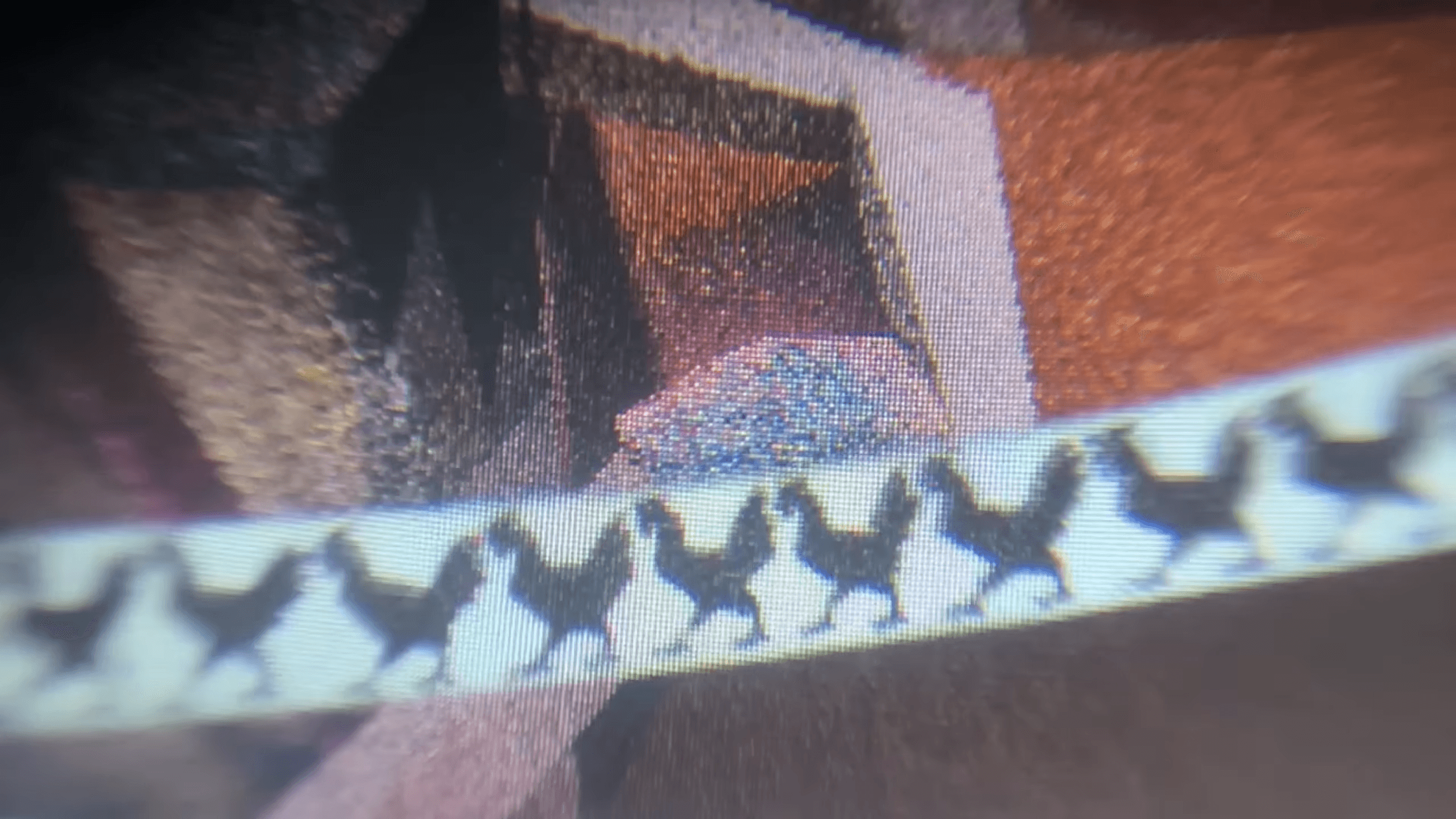
The protagonist shows his classmate Samantha a spinning paper with chicken illustrations. Courtesy of WhatsItLike.
At the top of the video’s description, WhatsItLike proudly states that “No AI was used in the creation of this video.” This gave me, and hopefully many others who saw this video, a lot of hope. Not because I ever thought it would have been made with AI, but because it so clearly showcases the kind of work that AI will never be able to create. Work that feels personal, full of empathy, truly creative and meaningful. This is the work that I love. The human touch of the creator is seen all throughout the video, with illustrations with colors outside the lines, live-action footage of the creator’s own arms, and traditional pen-and-paper animation. Even when showcasing the hyperdigital matrixes of 3D modeled chicken cages, occasionally the Blender UI is left on screen. It’s these small touches that comfort me, knowing a person was behind making this work about something they truly care about. Now, whenever the waves of AI corporations, enthusiasts, and slop seem to be unending, I like to return to this video to remind myself of the untouched creativity found in humans.
Existential Crisis in Class is a truly remarkable piece of art existing for free online, and one that I cannot recommend to enough people. I find it incredible how I have truly never seen anything like this video and how it uses all of its experimental methods while still having a clear, actionable message. It’s also an incredibly effective and emotional work, opening my eyes to a new issue and making me feel its importance through this video’s art. This is truly the type of art I value and desperately want to see more of in the world. Art that is unafraid to speak about complex, heavy topics. Art able to use different techniques and mediums to support their message. Art made by passionate creators wanting to make a change.
Existential Crisis in Class has gained quite a bit of attention through YouTube’s algorithm, but I still believe it’s an incredible work that deserves continued recognition. I also want to direct more people to WhatsItLike’s later and future works like Tears in the Robot Factory and I Filed Work in the Astral Plane, both of which continue his unique style of visuals and conceptual themes. You can find their work here, and I hope you give them your support in the future.